Basque know-how

BASQUE PELOTA

History, disciplines, rules and traditions of the Basque Country's iconic sport — and of the Grand Chistera, the flagship discipline of the Kostakoak de Bidart.

The disciplines

EIGHT DISCIPLINES, ONE PASSION

Bidart's flagship discipline

The Grand Chistera

The most spectacular open-court discipline. Three players per team, a long wicker chistera and a game of movement covering a huge court. It is the flagship discipline of the Kostakoak.

Open-court fronton
The fastest and best-known

Cesta Punta

Played with the same instrument as the Grand Chistera, but on a long left-wall court called Jai Alai. The best-known, most spectacular and fastest discipline. 2 vs 2.

Left-wall court (Jai Alai)
The most natural

Bare Hand

The core discipline: the ball is struck directly with the open hand, protected only by strapping. Singles or 2 vs 2, on all 3 court types.

All 3 court types
The most widely played

Pala

The most widely played discipline (children, women, men, veterans), with strong recreational appeal. Pala or paleta of various sizes, rubber or leather balls. 2 vs 2.

All 3 court types
An ancestral game

Pasaka

Derived from real tennis. A direct game: 2 vs 2 facing each other, separated by a net, only in a trinquet.

Trinquet
The noblest and most complex

Rebot

The oldest and most complex discipline. A direct game with uneven camps marked by a line. 5 vs 5, on the largest open-court frontons (over 90 m).

Large open-court fronton
The Argentine racket

Xare

Named after the instrument's strung net, also called the Argentine racket (invented by South Americans). 2 vs 2, only in a trinquet.

Trinquet
The Mexican national game

Frontenis

Its name evokes both tennis (racket) and the fronton. 2 vs 2 on a 30 m short left-wall court.

Short left-wall court
The flagship discipline

THE GRAND CHISTERA

Of all the open-court disciplines, the Grand Chistera is the favourite of Basque Country visitors in summer. The sun, the local colour, the ceremony of the point-singer and the judges' verdict all add to its aura.

Its distinctiveness lies in its athletic demands: three-player teamwork, decisive physical commitment, skill and, above all, a game of movement covering a huge court.

Today, Basque pelota is played in around thirty countries, mainly in the Americas but also in Asia. The record number of nations was set in Mexico in 2014 with 19 countries.

Basque pelota around the world

Basque pelota around the world

Technical sheets

THE FRONTON, THE BALL, THE CHISTERA

The fronton

The fronton

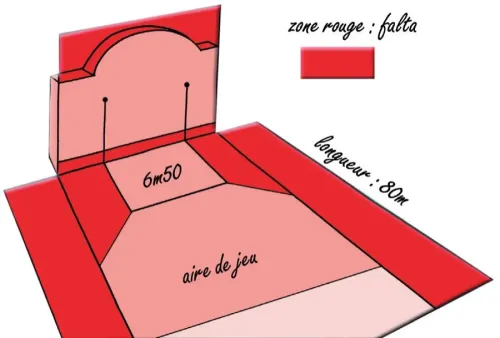
A stone wall (the fronton) and an earth or concrete court (the cancha). A metal line 80 cm above the ground marks the fault. The Bidart fronton, built in 1958, is the tallest in France.

The ball

The ball

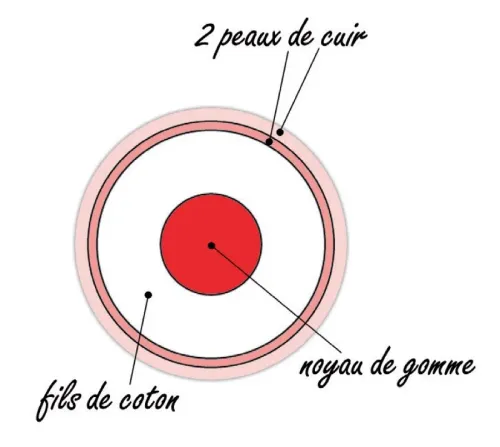
A rubber core wrapped in cotton thread, protected by two leather covers sewn edge to edge. Diameter ≈ 65 mm, weight 115-125 g, price ≈ €50.

The chistera

The chistera

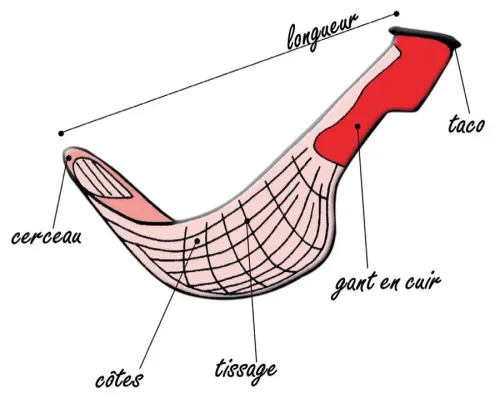
A curved chestnut frame (punta, taco, thirteen ribs) woven with wicker, topped with a leather glove. Handmade, weight ≈ 500 g, price ≈ €300.

A few key terms

THE PELOTA GLOSSARY

During the match

Ados
Deuce
A la novia
The final point
Atchiki
Ball held too long in the glove
Berritz
Point to be replayed
Pilotari
Pelota player
Pilotari ttiki
Budding pelota player
Plaza gizon
Especially fair-play player
Falta
Faulty ball
Ona
Good ball
Yo
Call announcing the serve
Pumpa
The ball bounced in the chistera
But
Serve

Counting points

  • 1 Bat
  • 2 Bi
  • 3 Hiru
  • 4 Lau
  • 5 Bost
  • 6 Sei
  • 7 Zazpi
  • 8 Zortzi
  • 9 Bederatzi
  • 10 Hamar